
CASE STUDY
Digital Marketplace Platform
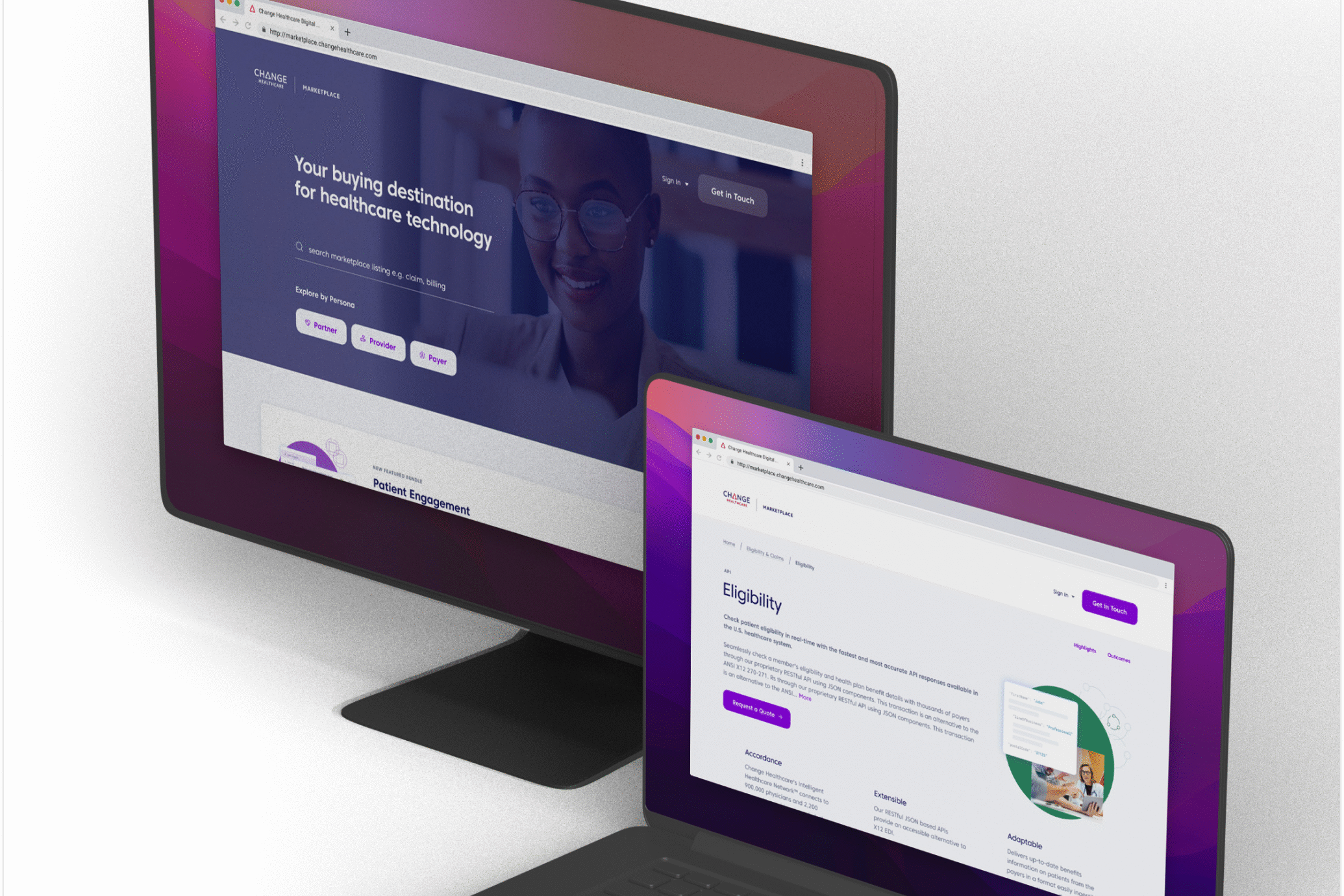
B2B/B2C SaaS platform that unified a fragmented healthcare product ecosystem into a scalable digital marketplace, transforming manual, sales-heavy workflows into a self-serve buying experience that accelerated revenue and reduced operational friction.
Designing clarity and speed into enterprise complexity
Led design for a digital marketplace connecting healthcare providers and payers to 250+ products across APIs, SaaS, and data services. The goal was to simplify the quote-to-contract process, which had historically slowed deals and created friction across the buying experience. Disconnected tools, inconsistent product taxonomy, and heavy reliance on manual sales workflows made discovery, evaluation, and purchasing inefficient.
Partnered with executive leadership and cross-functional teams across product, engineering, and sales to restructure the platform using systems thinking and data-informed design. Defined a unified taxonomy, redesigned end-to-end purchasing flows, and introduced self-serve capabilities that scaled enterprise-wide.
Outcomes
- 68% faster transactions (quote-to-contract)
- 24% reduction in operational cost
- $30M in first-year revenue contributions
How I approached it
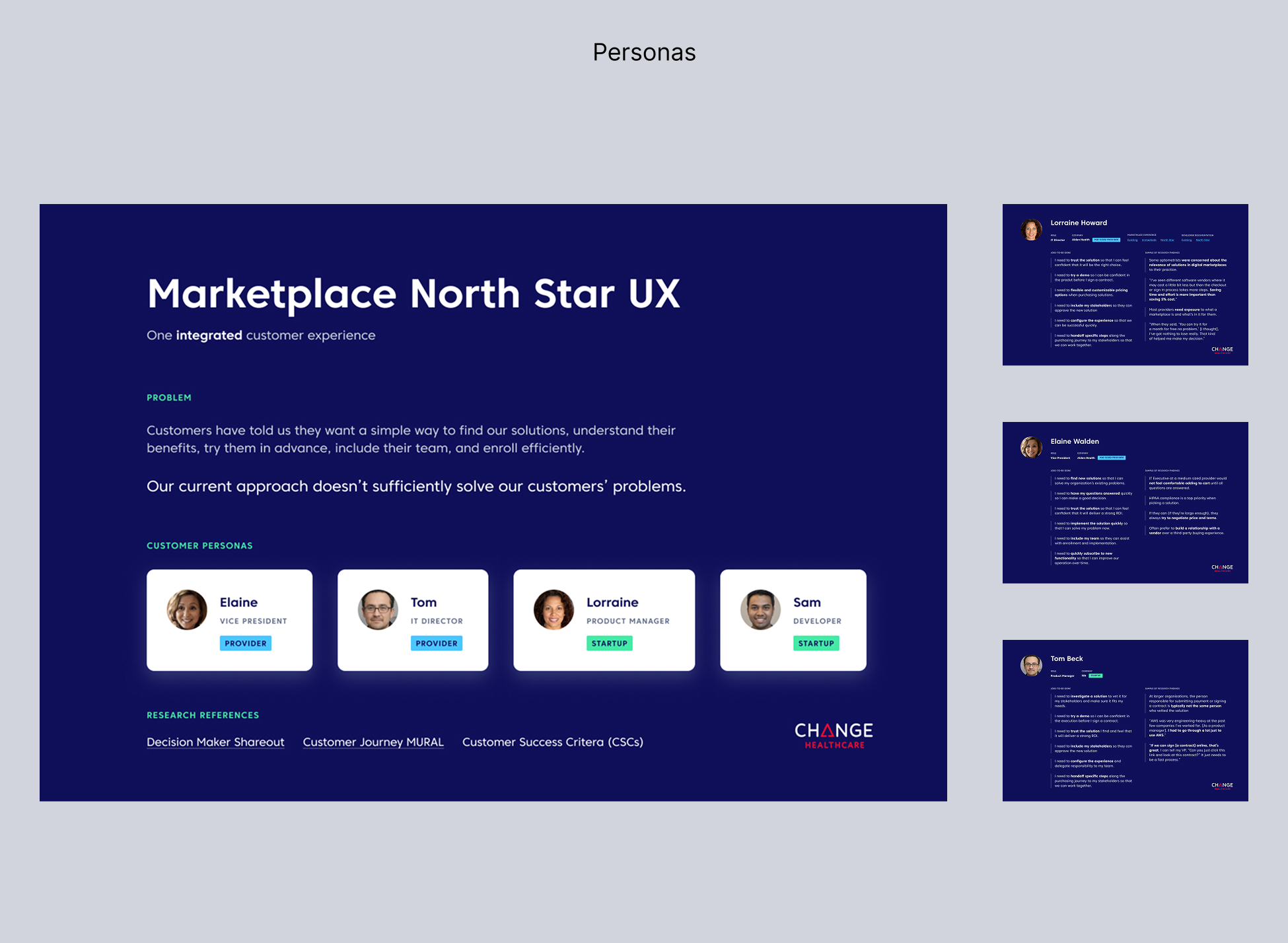
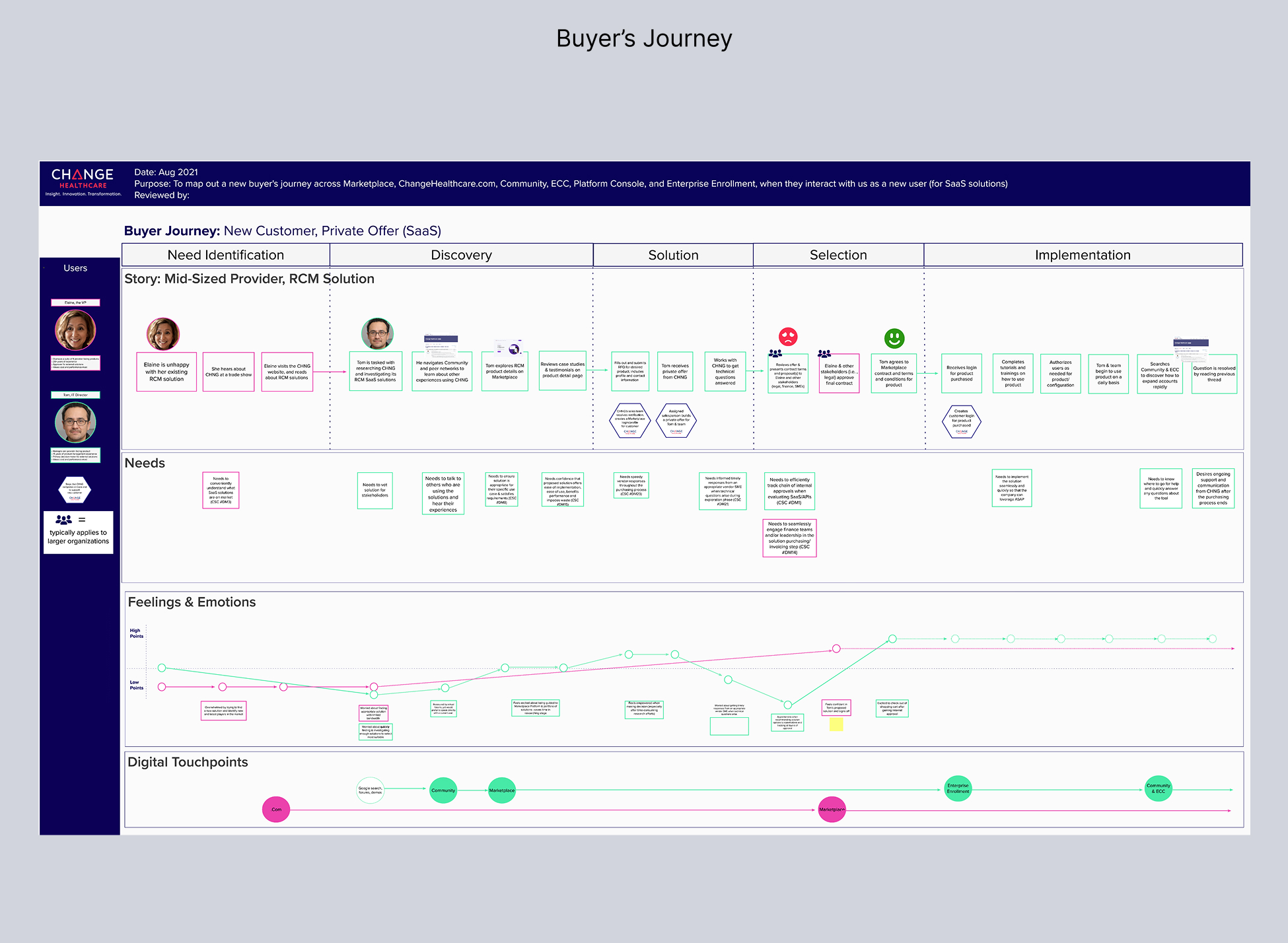
- Mapped end-to-end purchasing journeys across providers, payers, and internal teams to uncover friction and handoff breakdowns
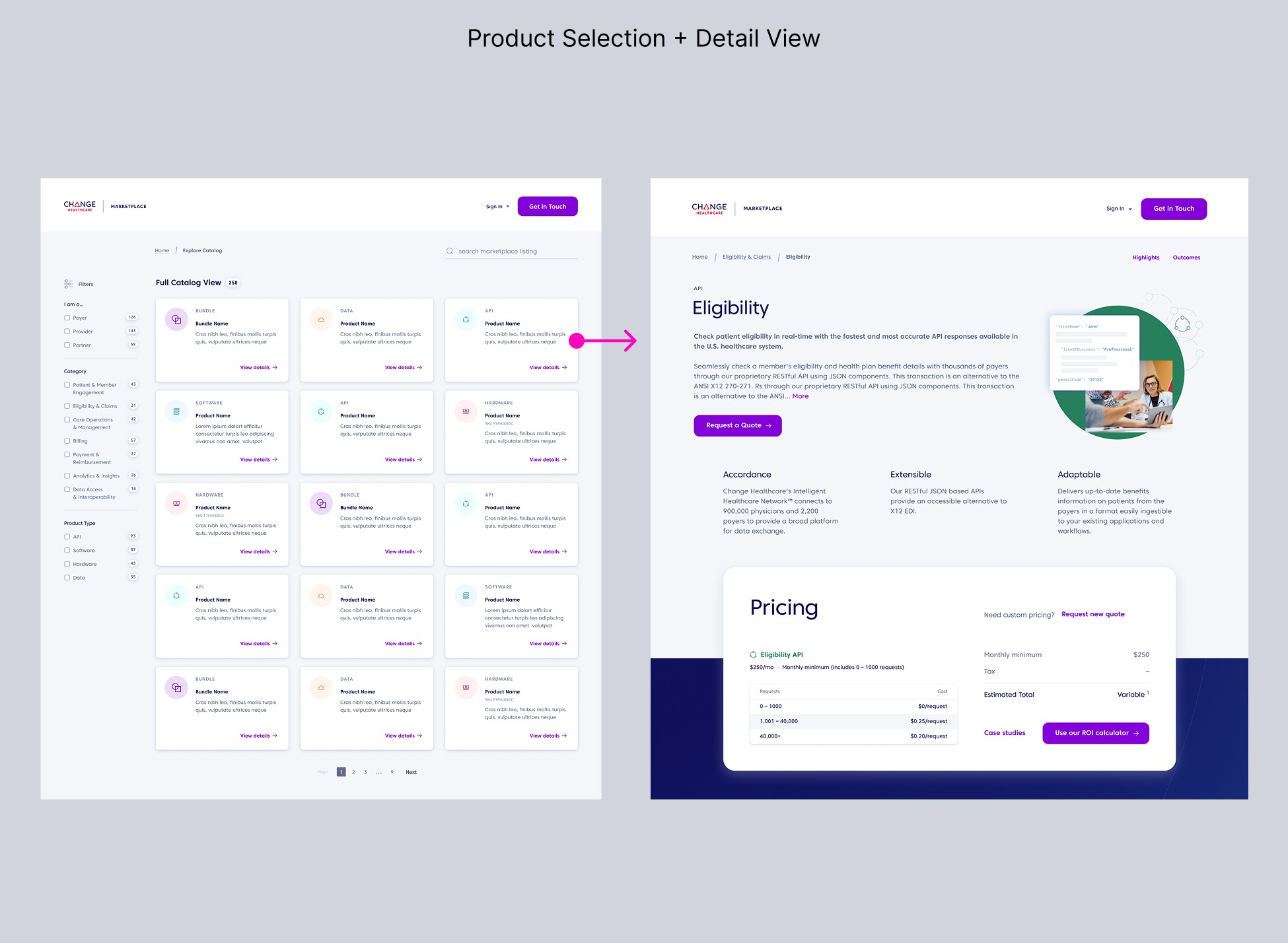
- Defined a unified product taxonomy across 250+ offerings to eliminate inconsistency and improve discoverability
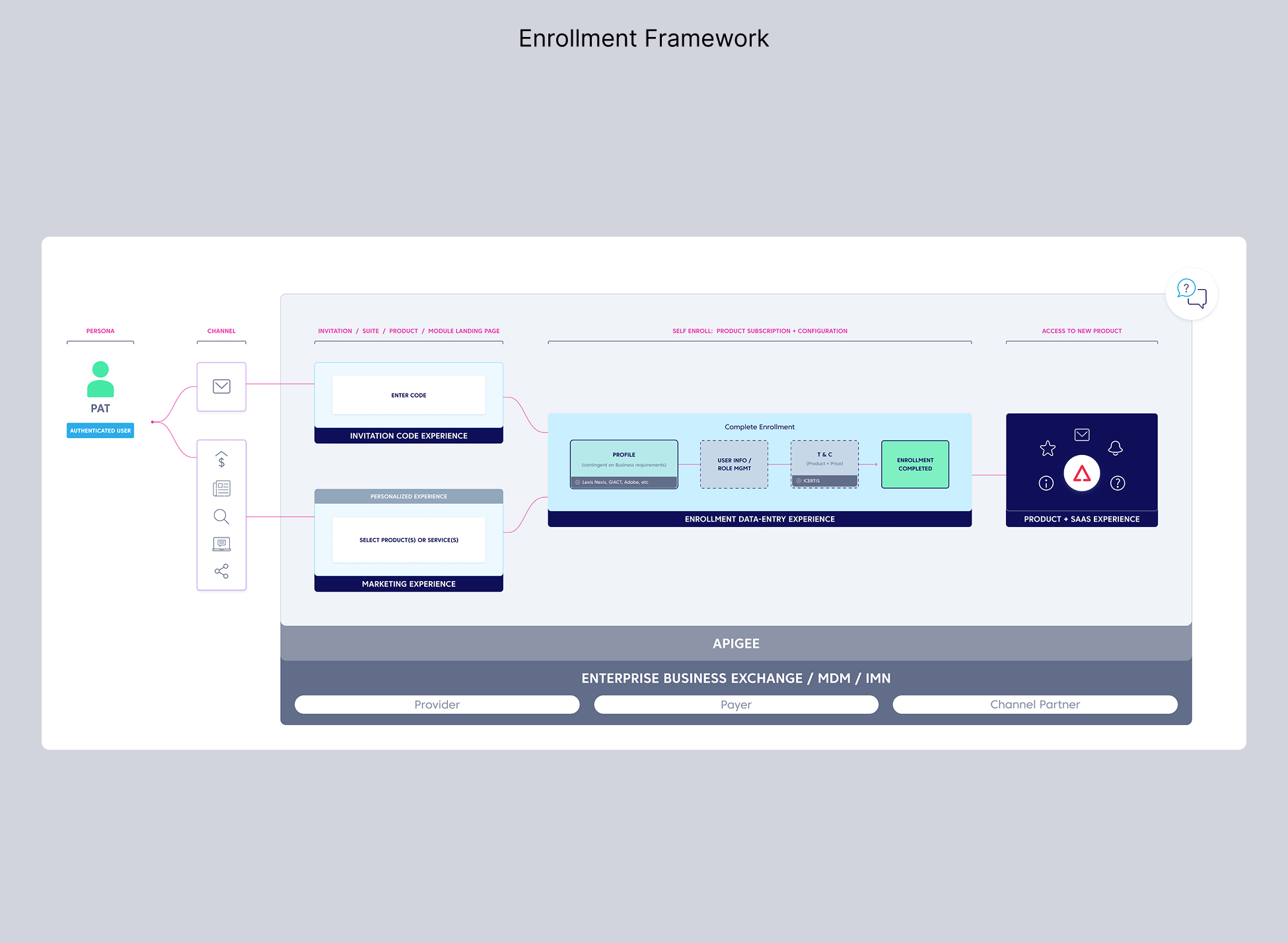
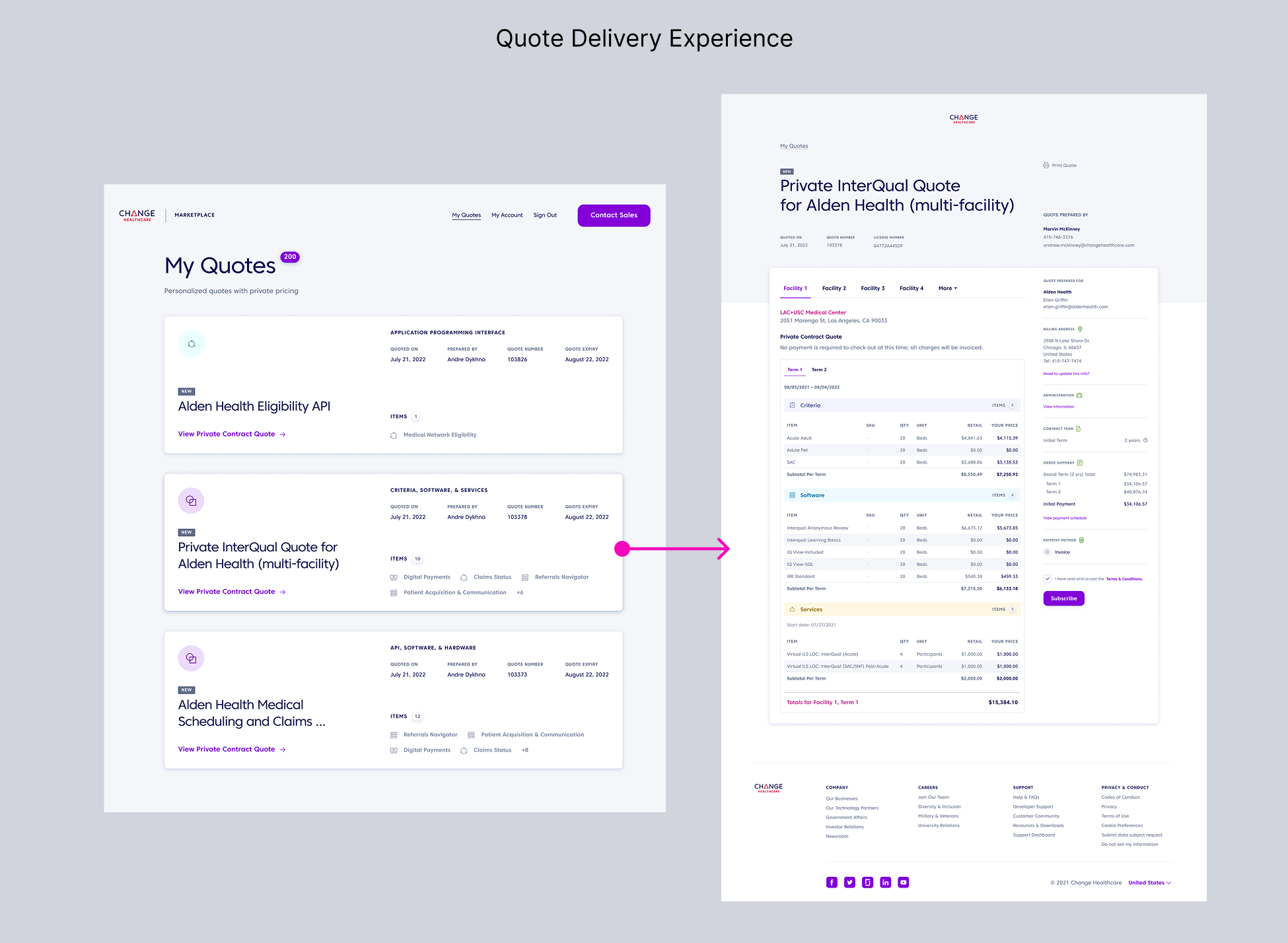
- Designed modular, end-to-end purchasing workflows spanning internal sales tools and customer-facing experiences
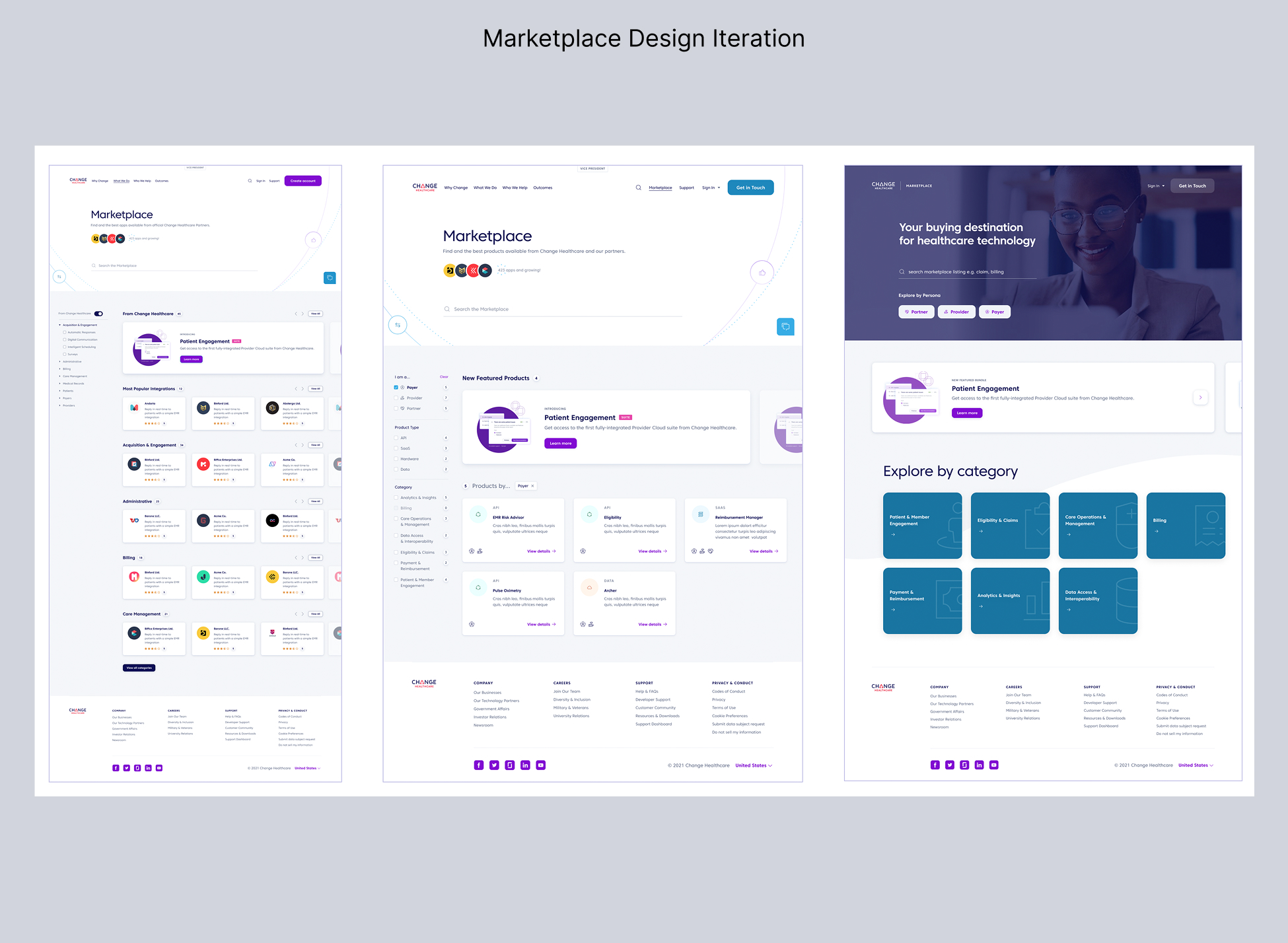
- Introduced guided navigation and dynamic pricing models to support comparison and decision-making
- Built reusable system patterns to scale across product verticals
- Created analytics visibility into quote performance, conversion, and drop-off points to support continuous optimization
What helped
- Aligned leadership, sales, and engineering around a shared definition of “speed to revenue”
- Turned enterprise constraints (compliance, pricing complexity, multi-role workflows) into structured design patterns
- Used rapid prototyping and validation cycles to de-risk decisions before full implementation
- Established a common language across teams, reducing misalignment and accelerating delivery
The work behind the results
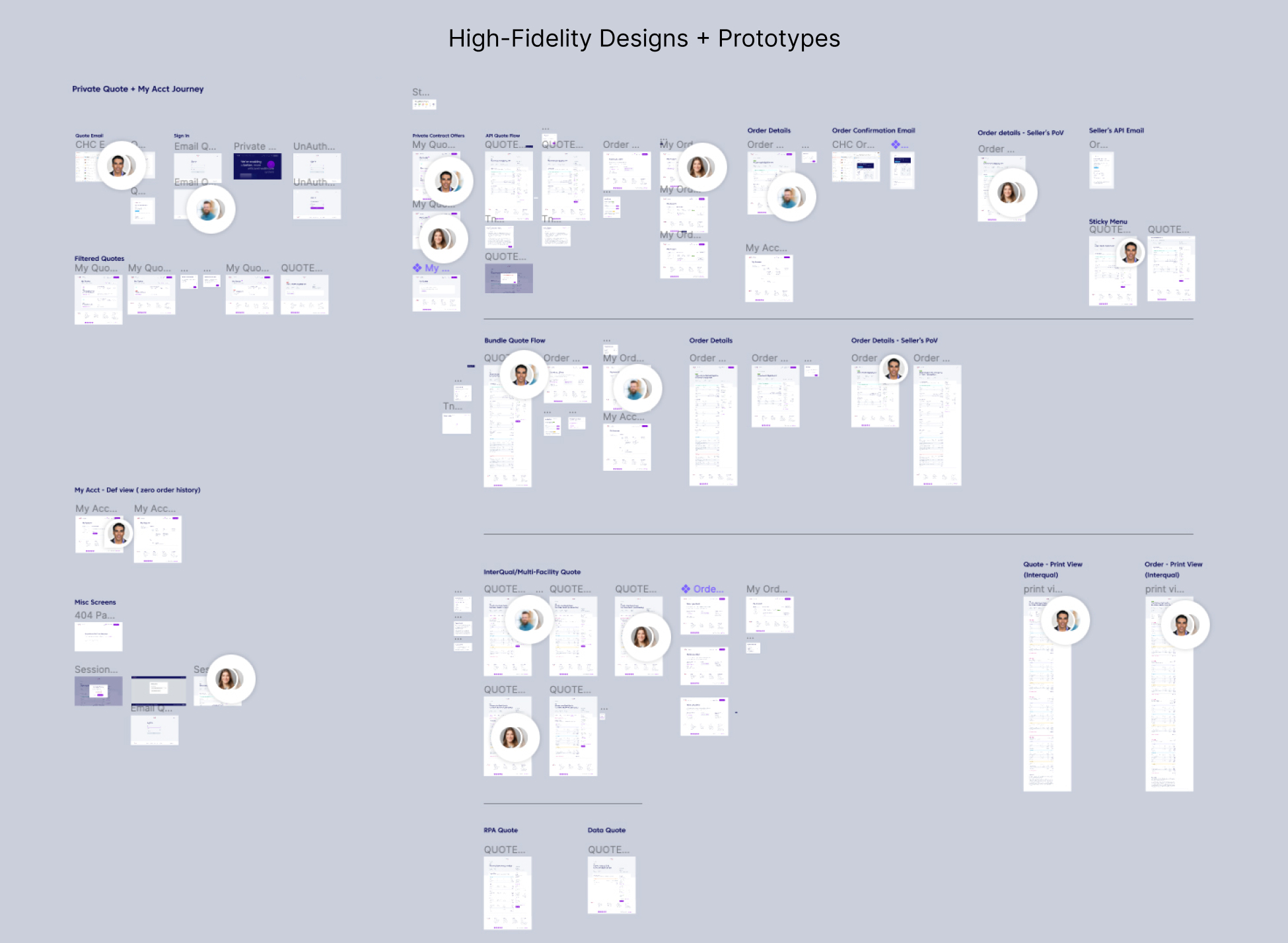
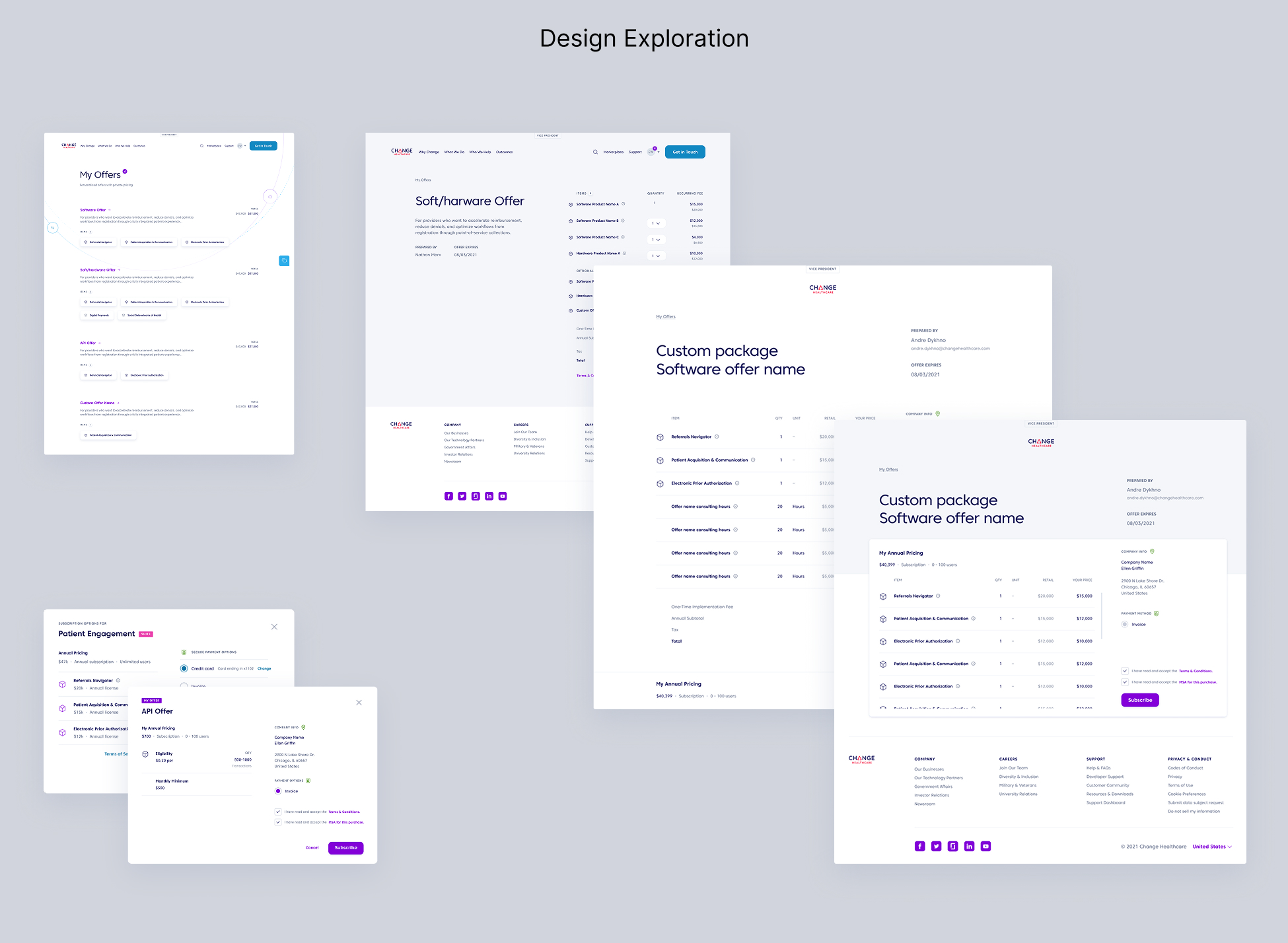
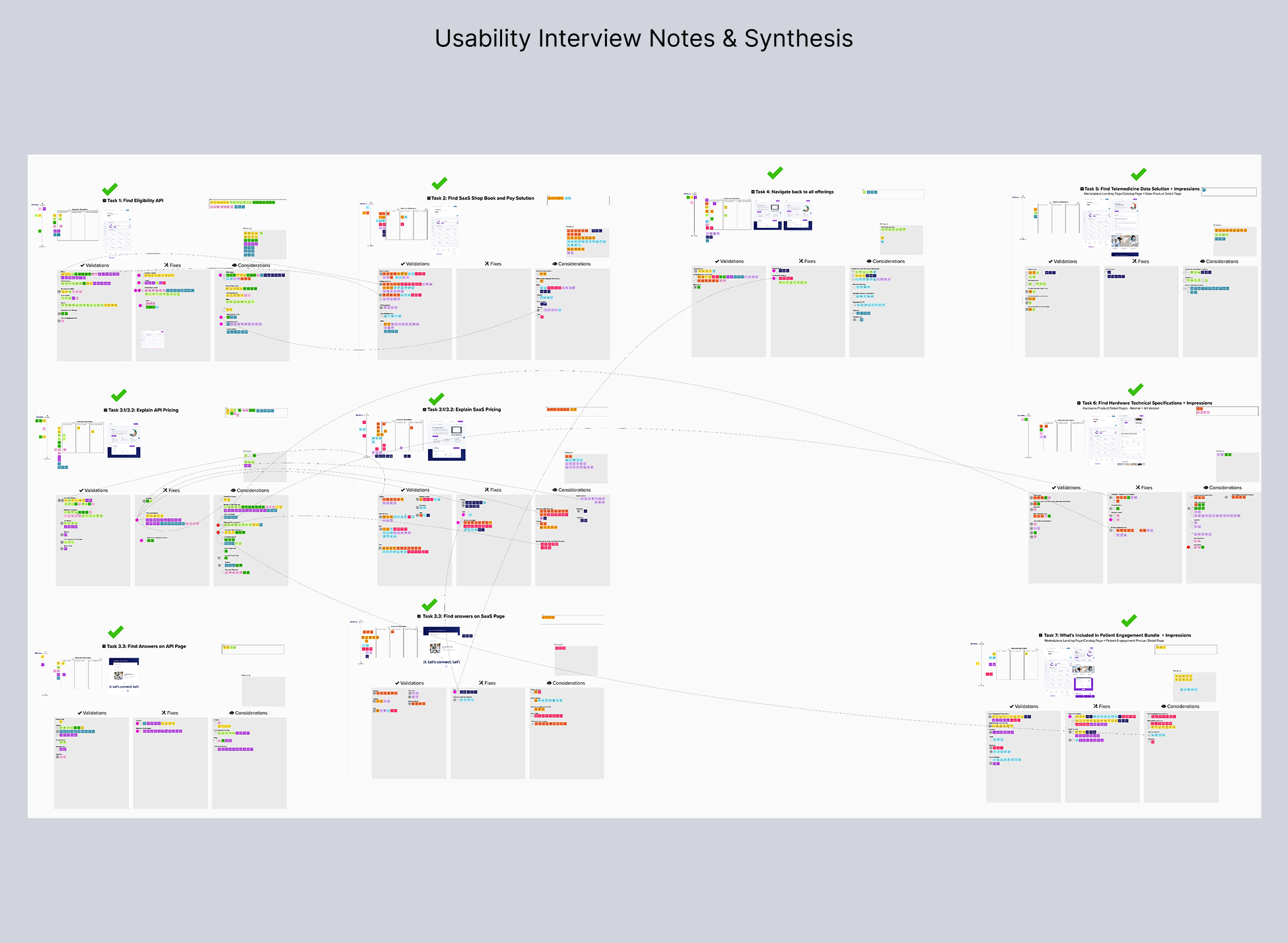
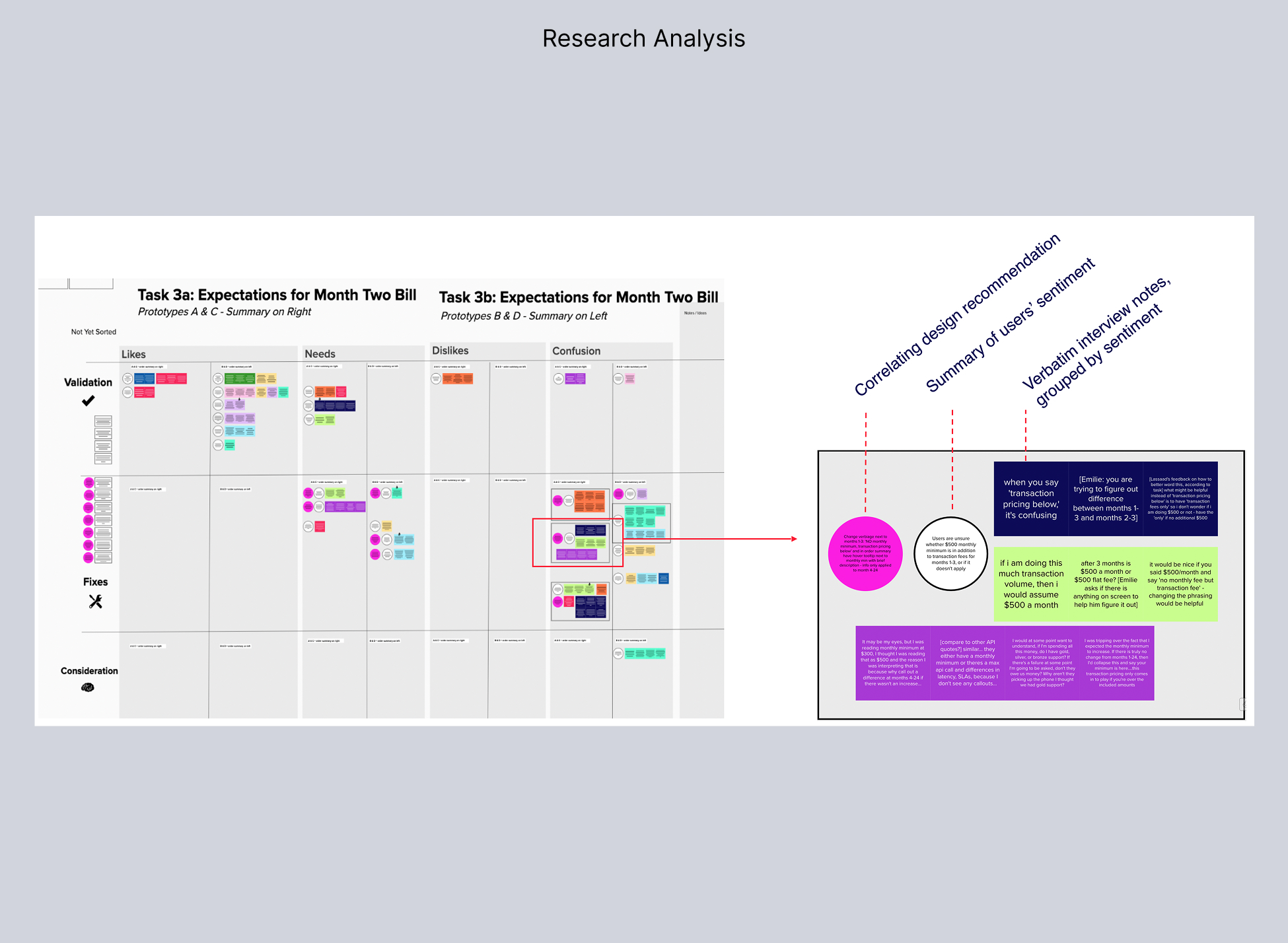
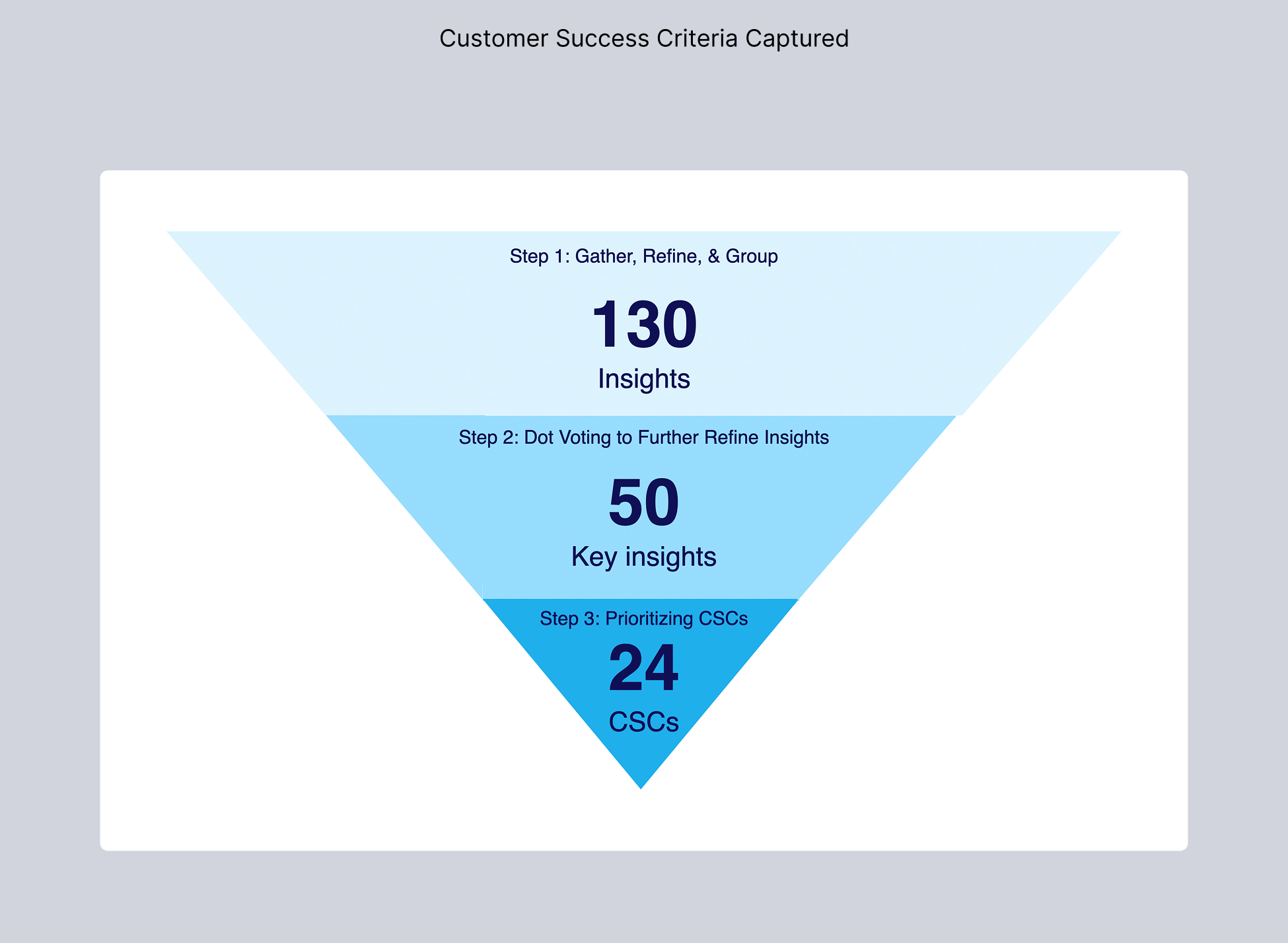
From discovery to launch, these snapshots capture the process, including research insights, interviews, journey maps, prototypes, design explorations, and data-informed decisions that shaped platform strategy and design.
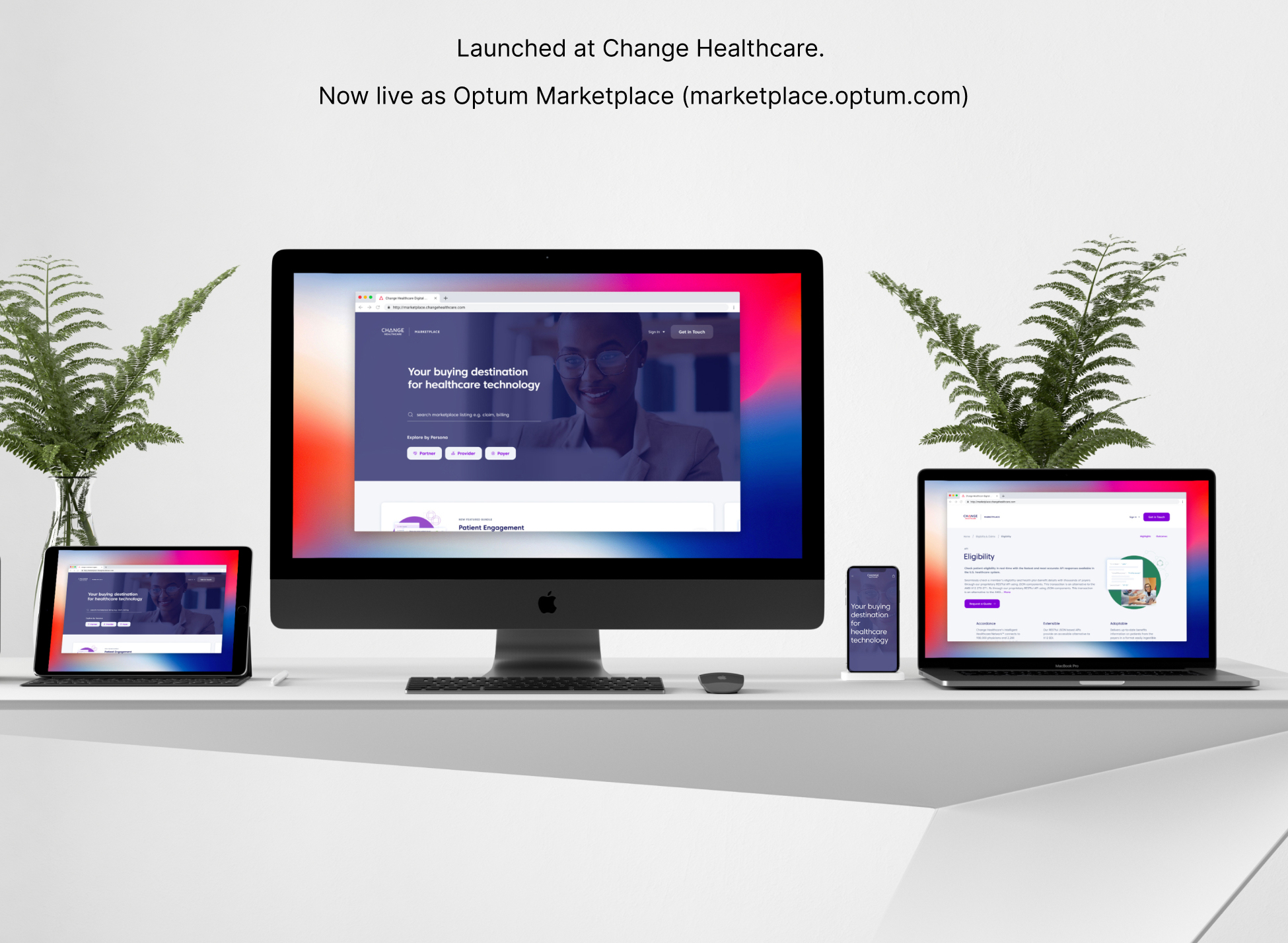
Designed and shipped at Change Healthcare. Now rebranded under Optum, where the platform continues to scale as a SaaS marketplace on the original architecture.
Live version (rebranded): marketplace.optum.com
What I learned
This project proved that designing a marketplace isn’t about screens and flows; it’s about orchestrating trust, alignment, and momentum across business, operational, and engineering realities. I learned that success requires more than a functional product; it requires building a system that unifies vision, removes cognitive friction, and enables scale. Designing for transaction flow became designing for confidence, confidence in the product, the data, the process, and the outcome.
I realized that when a product simplifies complexity, inspires trust, and enables self-sustaining growth, it stops being a “solution” and becomes infrastructure. The marketplace wasn’t just launched; it changed how teams thought, how customers engaged, and how business value was realized. That’s when design stops decorating and starts leading.