
CASE STUDY
Building an AI Enablement Platform
Shaped a B2B enterprise AI enablement platform through clearer product direction, role-based experiences, embedded AI guidance, and scalable design foundations. Showed how stronger systems and governance can turn complex AI initiatives into trusted, pilot-ready execution.
Clearmatrix was developing a B2B SaaS platform for enterprise AI enablement, serving organizations under pressure to act on AI but without a clear, governed path from opportunity to execution.
The product had strong market potential and a capable MVP. The challenge was focus: product direction, personas, workflows, engineering priorities, governance, and quick wins were all evolving at once.
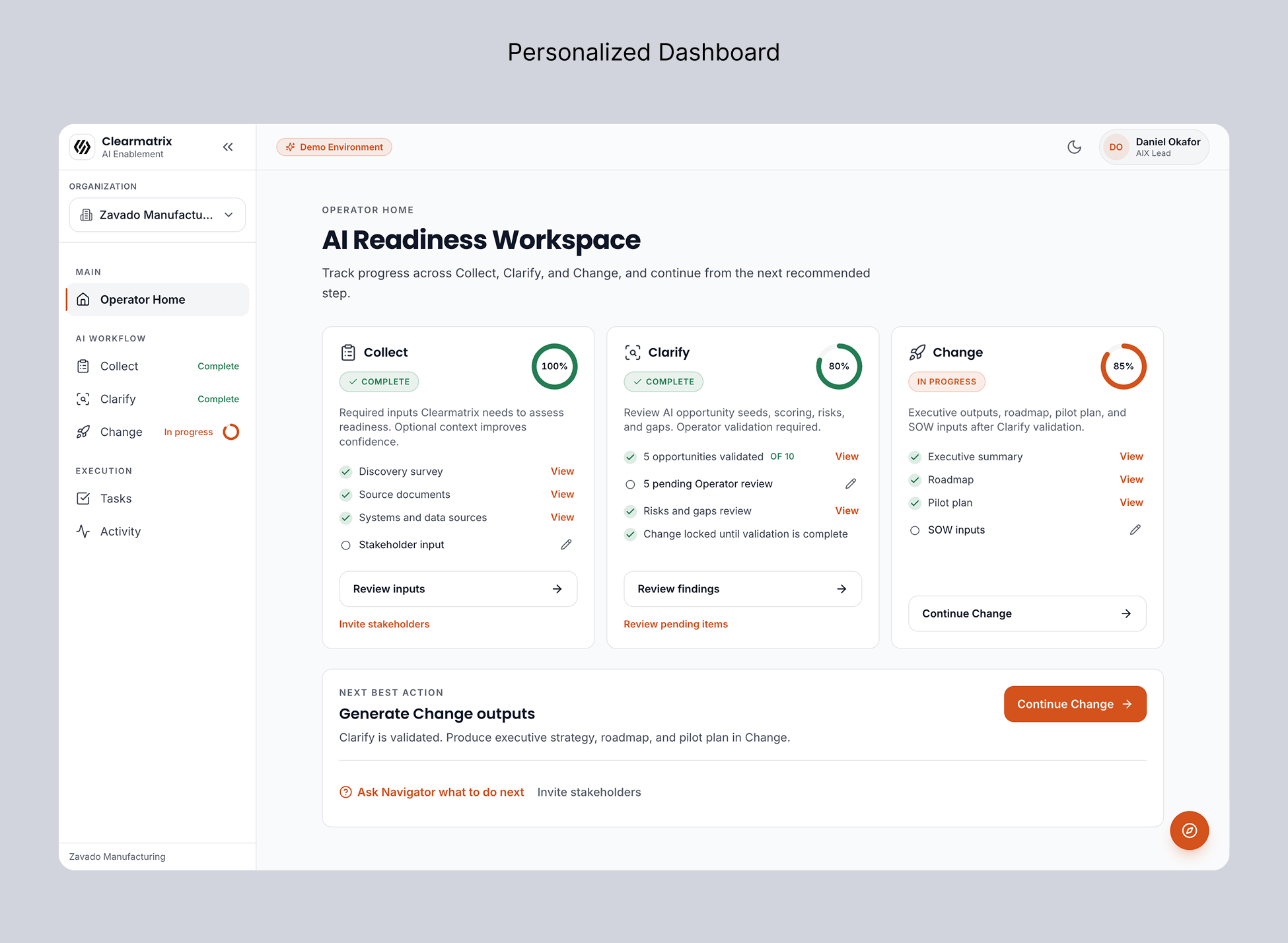
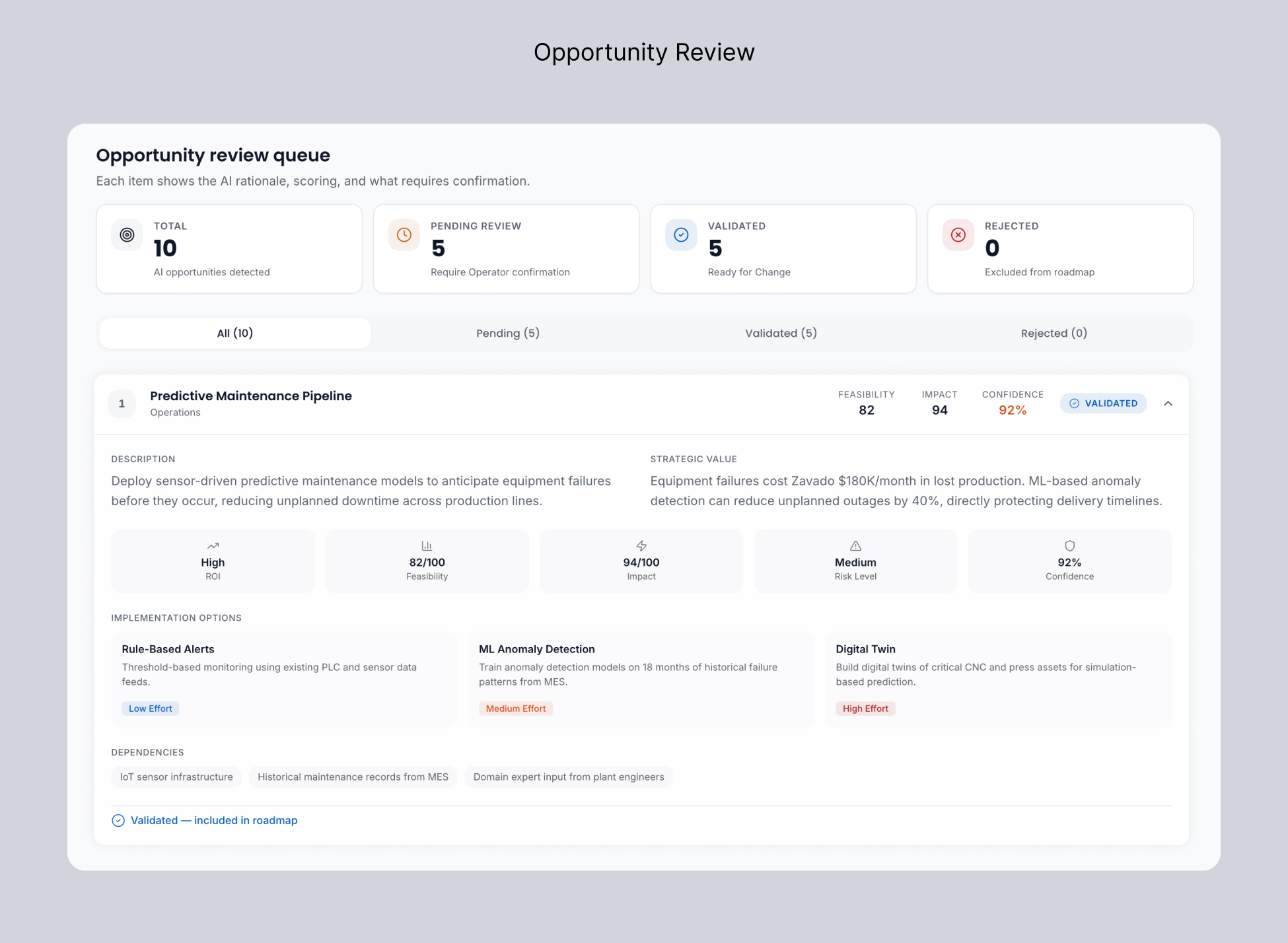
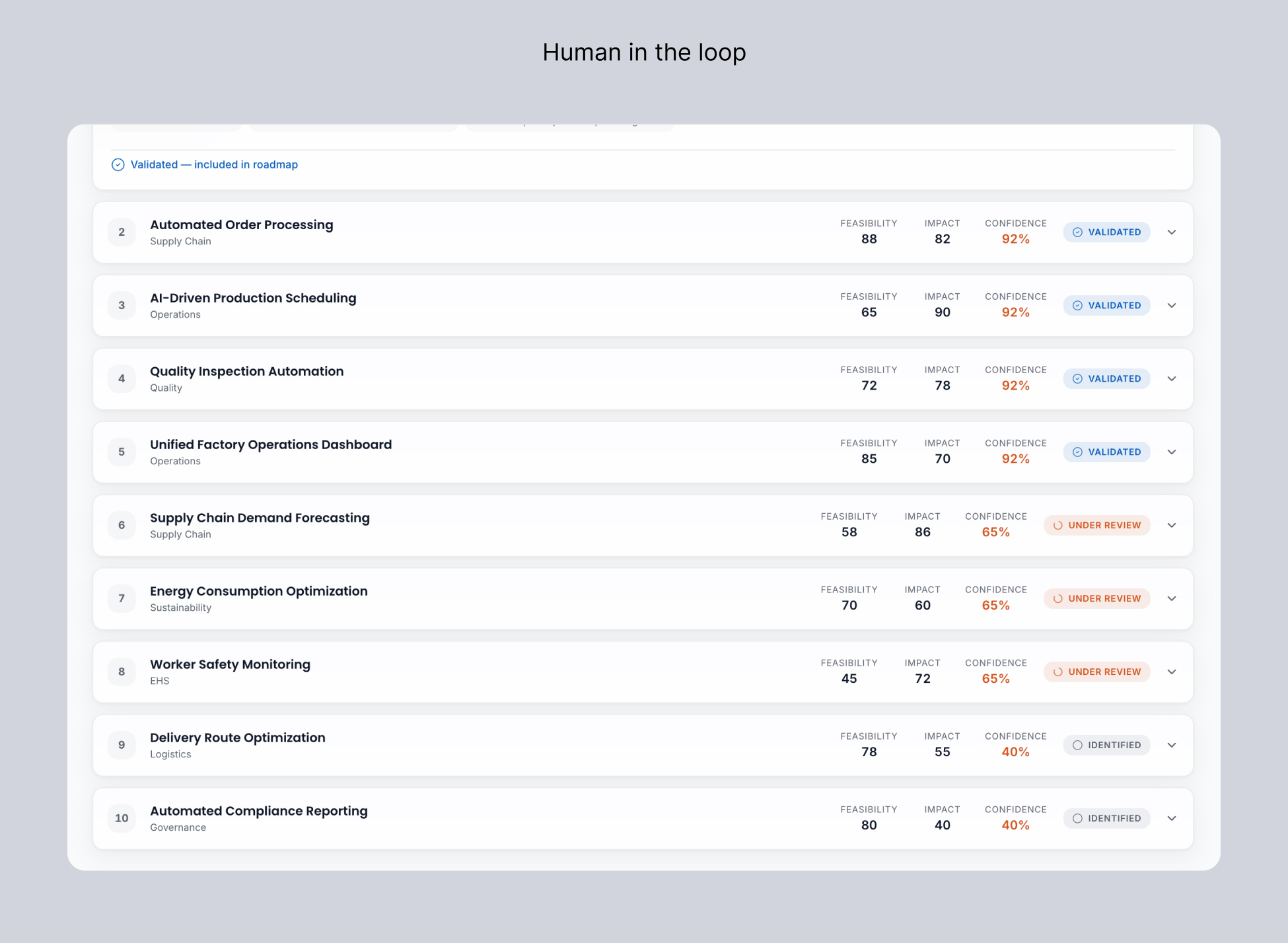
The engagement aligned product strategy, UX, AI governance, and delivery around a clearer system of role-based experiences, personalized dashboards, embedded guidance, and pilot-ready opportunities with defined value, timelines, and next steps.
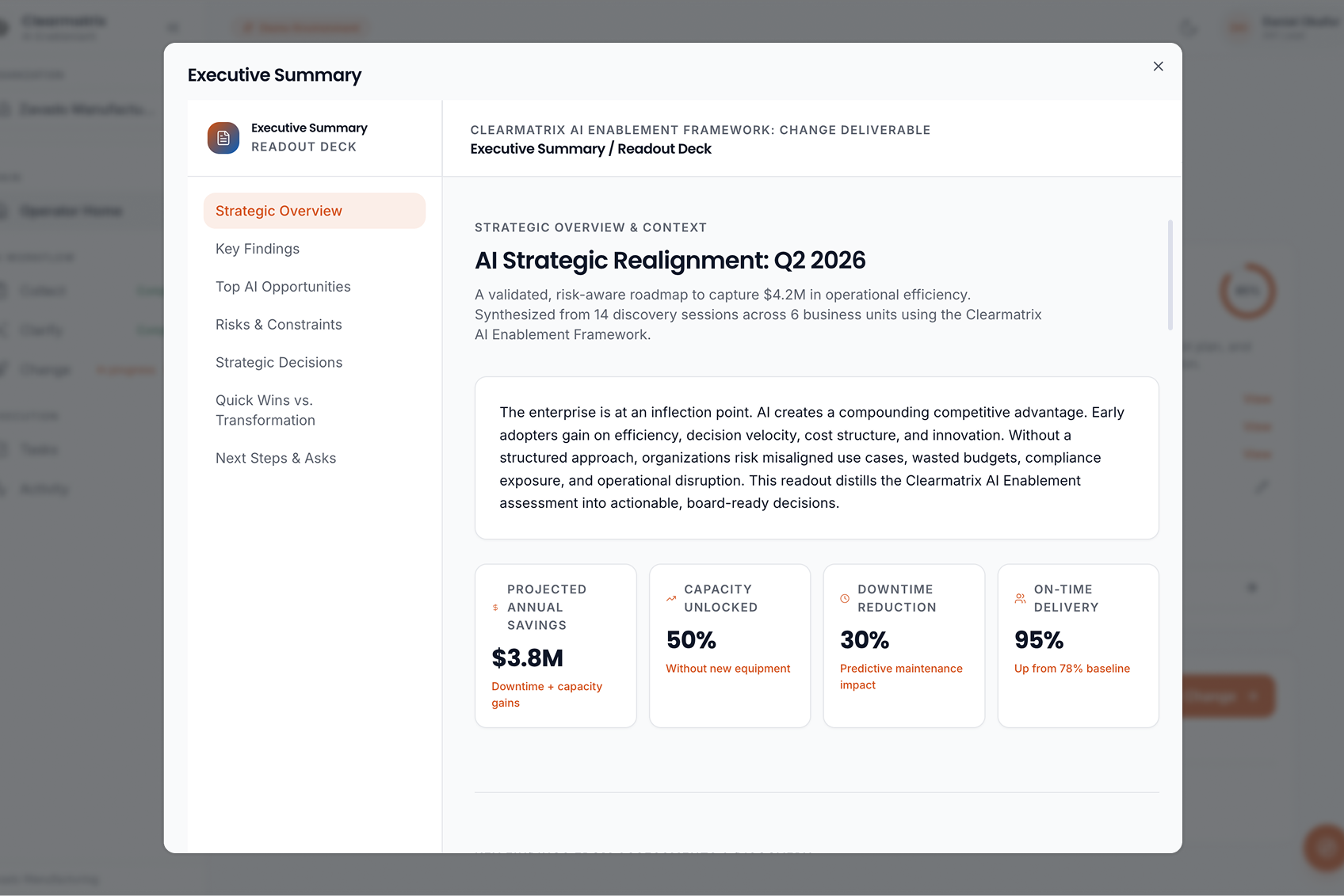
Outcomes
- $350K priority opportunity surfaced
- $1.4M portfolio value modeled
- 8 opportunities validated
- 6–12 week pilot path defined
We focused on
- Structured the BRD, roadmap inputs, and product documentation to clarify requirements, personas, assumptions, dependencies, risks, and open decisions.
- Connected the Ideal Customer Profile and business priorities to role-based journeys, personalized dashboards, and enterprise workflow direction.
- Applied systems thinking across onboarding, navigation, module status, permissions, progress visibility, and next-step guidance.
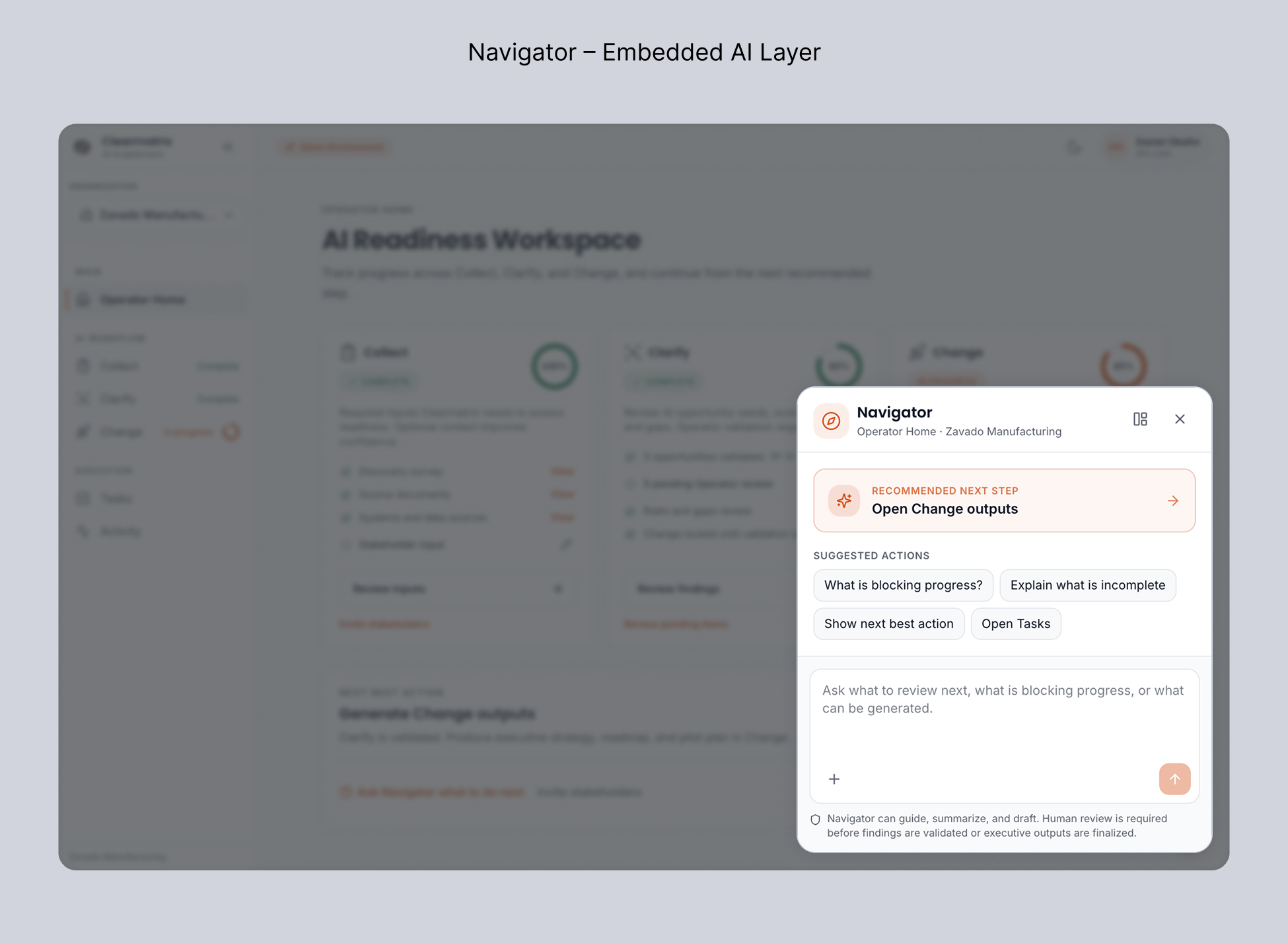
- Defined an embedded AI guidance layer that supported users in context rather than through a disconnected chatbot.
- Introduced T-shirt sizing and quick-win prioritization to balance momentum, technical complexity, AI dependencies, and delivery risk.
- Used rapid prototyping and data-informed design iteration to test workflows, expose gaps, and validate the “art of the possible” before deeper engineering investment.
- Established Responsible AI, design-system, and data-visualization foundations spanning human review, validation, accessibility, WCAG 2.2 AA, and scalable interface patterns.
What helped
- Direct collaboration with founders, executive leadership, AI architecture, and engineering.
- Daily office hours and short feedback loops that surfaced blockers quickly.
- Rapid prototyping in Figma and Lovable to test future-state workflows and make product direction tangible.
- A hybrid product, design, and product-operations approach that kept strategy connected to user needs and build reality.
The work behind the results
These artifacts show how product strategy, systems thinking, workflow design, AI governance, and rapid prototyping shaped the platform direction.
What I learned
This project reinforced that AI maturity is often an organizational maturity problem. The quality of the product depends on the quality of the systems behind it: clear documentation, defined workflows, sound governance, reliable data, and shared decision-making. When those foundations are weak, AI does not hide the gaps. It exposes them faster.
What I took away was that the real value of hybrid product and design leadership is not any single artifact. It is the ability to connect vision, personas, workflows, data, governance, and engineering into one coherent experience. When those pieces align, teams move with greater clarity, make better decisions, and turn ambitious ideas into something people can trust and teams can actually build.